What is ADHD/ADD?
ADHD is a chronic condition marked by persistent inattention, hyperactivity, and sometimes impulsivity. It begins in childhood and often lasts into adulthood. While ADD and ADHD used to be different diagnoses, many psychiatrists now lean toward the view that they are the same diagnosis on a spectrum.
The numbers
- In CDC's 2016 national survey, parents reported that 3.3 million adolescents ages 12–17 had ever been diagnosed with ADHD. The figure counts what parents told a survey, not diagnoses confirmed by a clinician.
- Teen drivers diagnosed with ADHD are more likely to be in a traffic accident, be issued traffic violations, and engage in risky driving behaviors.
- Up to 27 percent of adolescents with substance abuse disorder have comorbid ADHD.
- Adolescents with ADHD clash with their parents about more issues than adolescents without ADHD.
- Male high-school students with ADHD are more likely to have problems with attendance, GPA, and homework — missing school 3 to 10 percent of the time and being 2.7 to 8.1 times more likely to drop out.
Watch: ADHD/ADD — causes, symptoms & pathology (Osmosis, YouTube).
In their words
When I Found the Courage to Seek Accommodations as a University Student With ADHD
“My fear that I would be turned down for accommodations once I was studying for my bachelor's degree cost me the ability to graduate with honors… I fought daily in undergraduate school to focus on my assignments with my ADHD interfering with many of my planned times to do assignments.” — Angel Pilkin
Read the article (The Mighty)
What “Attention” Is Really Like With ADHD
“Growing up in school, I rarely raised my hand to answer a question… I wasn't wrong, but I wasn't right either. No one else seemed to have as much trouble figuring out the right answer, and at the time I found that frustrating and discouraging.” — Elle Ivy Rae
10 Study Tips for the Student With ADHD
“In high school, I was a D-student. I wasn't unintelligent, quite the opposite, actually… Whenever I had to sit down and study, I would short-circuit.” — Jimmy Ladd
Read the article (The Mighty)
The chemistry behind ADHD
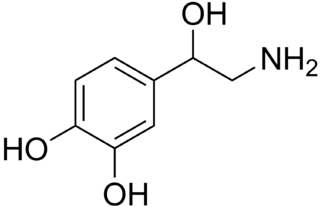

Information travels the brain's neural circuits via neurotransmitters — each with a unique molecular “key” that attaches only to a neuron with the corresponding receptor “lock.” Brain scientists have found that deficiencies in specific neurotransmitters underlie many common disorders — and ADHD was the first disorder found to result from a deficiency of a specific neurotransmitter, norepinephrine, and the first found to respond to medications that correct the deficiency. Each norepinephrine molecule is built from dopa, converted into dopamine, and converted in turn into norepinephrine.
ADHD seems to involve impaired neurotransmitter activity in four brain regions:
- Frontal cortex — orchestrates attention, organization, and executive function; a deficiency here can cause inattention and impaired executive functioning.
- Limbic system — regulates emotions; a deficiency can cause restlessness and emotional volatility.
- Basal ganglia — relay information between brain regions; a deficiency can “short-circuit” information, causing inattention or impulsivity.
- Reticular activating system — the major relay among pathways entering and leaving the brain; a deficiency can cause inattention, impulsivity, or hyperactivity.
These regions interact, so a deficiency in one can cause problems in the others — and ADHD may result from problems in any of them.
How does treatment help?
ADHD's symptoms don't just affect learning; they create difficulties in everyday life with friends and family. Treatment plans are tailored to each child, and often combine several approaches:
- Medication — the treatment experts agree is most effective for most people with ADHD. Studies show it works well for around 80 percent of them, as long as the type and dosage are right. “Works well” means symptoms improve, which is not the same as their going away. There are stimulant and non-stimulant types; side effects usually fade within days, and a prescriber can switch medications when they don't.
- Behavior therapy — changing negative behaviors into positive ones, often with a rewards system at home.
- Cognitive behavioral therapy — a talk therapy about thoughts, feelings and behavior. It is not specifically for ADHD, but it can help, particularly for someone who also has anxiety or depression.
- Social skills groups — practicing interaction skills with a professional.
- School support — classroom accommodations like extended test time, front-row seating, and permission to move; a behavior intervention plan where needed.
- Alternatives with some research backing — exercise, outdoor activities, omega supplements, mindfulness, and dietary changes. Over-the-counter supplements and “train the brain” games are not backed by research.
Books that portray ADHD
Fish in a Tree, by Lynda Mullaly Hunt
Ally has been smart enough to fool a lot of smart people — until a teacher sees the bright, creative kid underneath the troublemaker. Buy the book
Hyper: A Personal History of ADHD, by Timothy Denevi
Among the first generation of boys prescribed medication for ADHD in the 1980s, Denevi traces both his own story and the history of how we came to medicate more than four million children. Buy the book
Celebrities who advocate
Michael Phelps
“I simply couldn't sit still, because it was difficult for me to focus on one thing at a time. I had to be in the middle of everything.”
Read the article (Understood)
Solange Knowles
“I was diagnosed with ADHD twice. I didn't believe the first doctor who told me… but then the second doctor told me I had it.”
A note from the team
We are not experts and do not seek to diagnose or act in place of professional psychiatric treatment. We are an organization seeking to raise awareness. If you have concerns about any of this material, please email us.
Sources
- WebMD — Attention-deficit/hyperactivity disorder (the definition; the cited page now redirects here)
- ADDitude — ADHD statistics (restored from the older version; the newer page misattributed these to a depression page)
- ADDitude — How neurotransmitters work in ADHD brains (the chemistry section)
- Understood — Treatment for kids with ADHD (the treatment section, restored from the older version)