The ancient world
-
c. 6500 BC
Prehistoric skulls and cave art show surgical drilling used to treat head injuries and epilepsy — and, it was believed, to release evil spirits trapped within.

-
c. 2700 BC
This date is traditional rather than firmly historical. Chinese medicine centered on the balancing forces of yin and yang; physical and mental illness were understood as imbalances between them.
-
c. 1900 BC
Mesopotamian and Egyptian papyri described women suffering from a mental illness called the "wandering uterus."

-
c. 1100 BC
Mental disorders were mostly treated with Traditional Chinese Medicine — aromatherapy, acupuncture, emotional therapy — with noted connections between organs and emotions.

-
c. 1100–800 BC
Diseases and mental disorders in ancient Mesopotamia were believed to be caused by deities.

-
c. 600 BC
The Hindu epics Ramayana and Mahabharata contained fictional descriptions of depression and anxiety; mental disorders were often attributed to the supernatural.

-
c. 400 BC
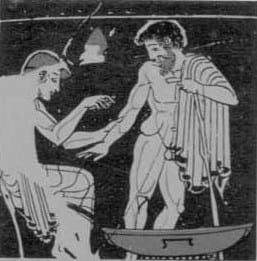
Hippocrates tried to separate superstition and religion from medicine, attributing mental and physical illness to the balance of four bodily humors. Later, Galen’s humoral theory made bloodletting a standard treatment.
The Middle Ages and Renaissance
-
Medieval era
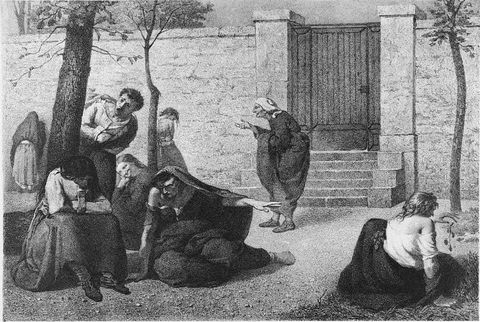
Isolation was the preferred treatment; people with mental illnesses were commonly sent to asylums. Many in Europe were put into madhouses and workhouses when families would not care for them.
-
c. 1486
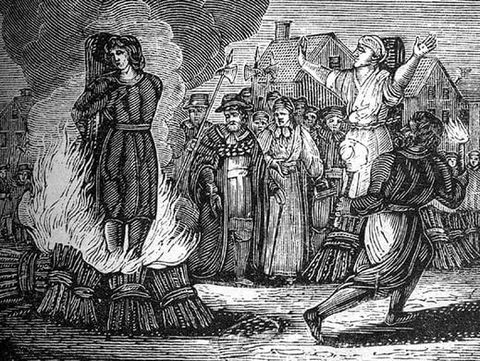
Amid the religious conflicts of the era, two Dominican monks wrote an influential witch-hunting manual.
-
1500s
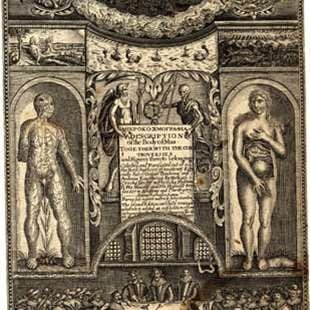
Hospitals and asylums became established, commonly used to confine the poor, the homeless, and the criminal. Engravings from 1525 show trephination — drilling into the skull — believed to cure various mental disorders.
-
Mid-1500s
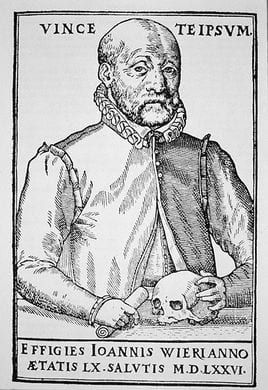
Johann Weyer and Reginald Scot argued that women accused of witchcraft were actually suffering from mental illnesses; the church banned their writings.
The 1600s and 1700s
-
1600s
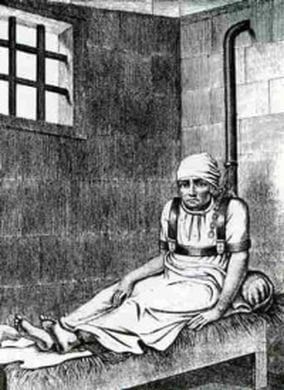
People sought protection from mental illness through prayer, exorcism, and talismans; disorders were treated with sedatives of unguents, laudanum, and opium. Care was pushed from families onto governments, and stigma grew quickly.
-
1700s
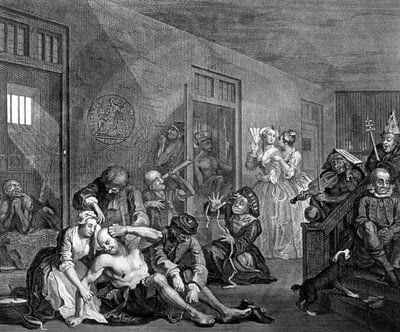
Attitudes began to shift: people with mental illnesses started to be treated with more respect, and in some places harassing them was forbidden.
-
1785
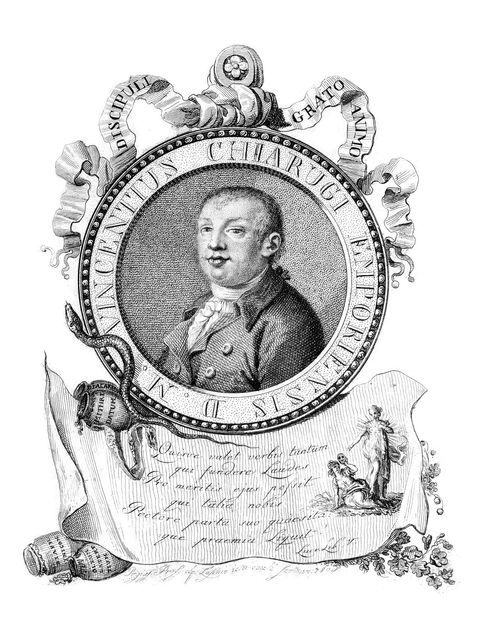
The Italian physician Vincenzo Chiarugi released his patients from confinement, encouraging good hygiene and training for occupations. Newly established asylums appeared where doctors treated patients with kindness.
The 1800s
-
1810s–1840s
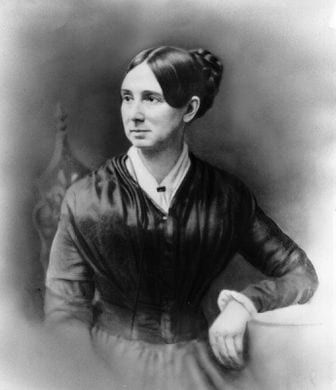
Dorothea Dix, a retired schoolteacher, discovered how poorly mentally ill people were treated and advocated for state hospitals, helping open over 30 institutions. In 1840 the United States had 178 hospitals, only about a third of which treated mental illness.
-
1883
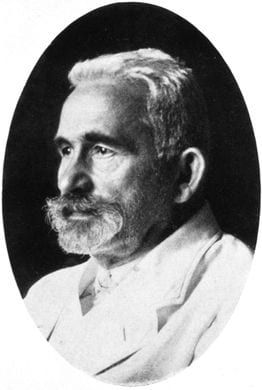
The German psychiatrist Emil Kraepelin published a systematic classification of psychological disorders by symptom — effectively the first diagnostic manual.
The 1900s
-
Early 1900s
Josef Breuer and Sigmund Freud treated patients with hypnosis, leading to the first psychoanalysis — the dominant treatment of the first half of the century. "Shell shock," what we now call PTSD, named soldiers’ reactions to World War I.

-
1927
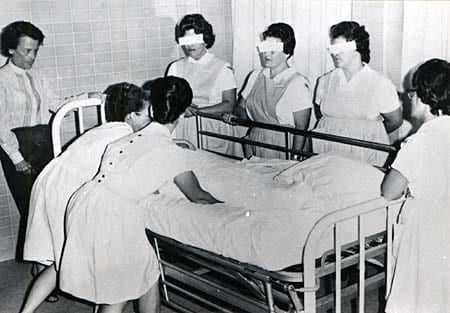
Insulin coma therapy was introduced and used for several decades: patients were injected with insulin to induce daily comas.
-
1930s
Treatments in development included insulin coma therapy, malaria injections, electroshock, and lobotomy — surgery designed to disrupt circuits in the brain, which carried enormous risks and nonetheless won a Nobel Prize.
-
1946
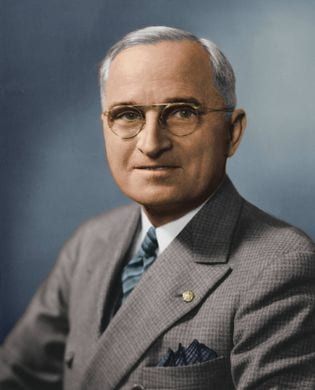
President Harry Truman signed the National Mental Health Act, calling on doctors to research brain and behavior.
-
1949
Lithium came into use as a medication for bipolar disorder.
-
1950s
The first antipsychotic, chlorpromazine, reached the market. It did not cure psychosis, but studies showed that 70% of patients with schizophrenia clearly improved on antipsychotic drugs. Institutionalization peaked at over half a million hospitalized patients.
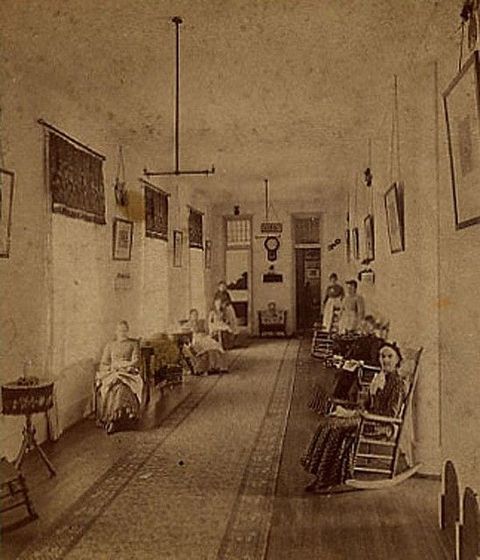
-
1963
The Community Mental Health Centers Act limited hospitalization to people who were a danger to themselves or others, and severely mentally ill people moved from psychiatric institutions into local mental health homes.

-
1980s
The number of institutionalized people fell from a peak of 560,000 to just over 130,000 by 1980.

Present day
-
Today
Stigma has lessened around mental health, but there is still plenty of room to grow — and plenty left to learn about the brain, which still holds a lot of mystery.
Three things worth looking at closely
Some of the pictures from this period are not illustrations. They are the evidence, and they carry information the timeline above only summarises. Each is described in full below the image, so the description is on the page for everyone rather than hidden in an alt attribute.
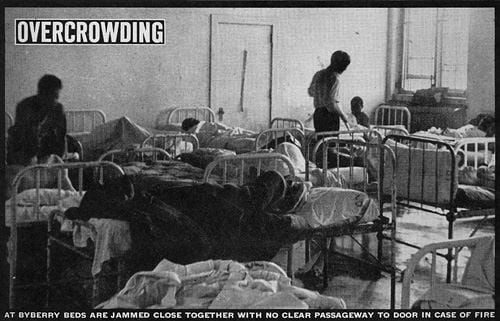
A long ward with iron bedsteads pushed against one another in rows, almost no floor visible between them. The photograph is headed OVERCROWDING, and the caption printed with it records that at Byberry the beds are so close together that there is no clear passageway to the door in case of fire.
That last detail is the point of the picture, and it is why it belongs beside the 1950s entry above. Institutionalization peaked at over half a million hospitalized patients in that decade. This is what the peak looked like from inside, and the fire-exit line is the sentence that makes it concrete: it is not a photograph of a crowded room, it is a photograph of a room somebody had measured and found dangerous.
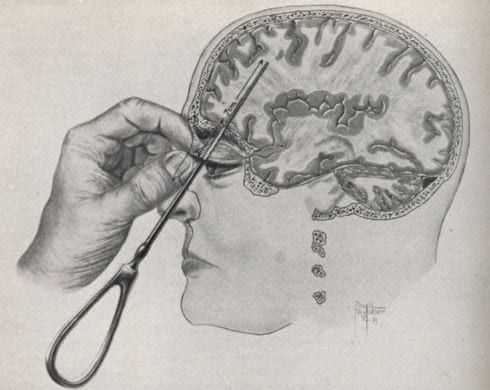
A side-on cutaway of a head. A long, thin instrument enters above the eyeball, passes through the thin bone at the top of the orbit, and is driven back and swept sideways in the frontal lobe, severing the connections between it and the rest of the brain.
The procedure took minutes and needed no surgical theater, which is why it spread. It was performed on tens of thousands of people in the United States, frequently without meaningful consent, and its effects were permanent. The 1930s entry above notes that lobotomy won a Nobel Prize; both facts are true at once, and holding them together is the reason this diagram is here rather than the reason it is not.
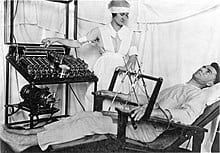
A person lies on a hospital bed with electrodes held to the temples while several staff stand over them, holding the body down. There is no anaesthetic apparatus in the frame.
This is what the word “electroshock” still calls to mind, and the image is genuinely of that era. It is worth knowing that modern ECT is a different procedure: it is given under general anaesthetic with a muscle relaxant, so there is no convulsion to restrain, and it remains an effective treatment for severe depression that has not responded to anything else. The picture is history, not a description of what happens now.
Sources
- Noba Project — History of mental illness
- Unite for Sight — A brief history of mental illness and the U.S. mental health care system (the live page now 404s; this is the Internet Archive's capture from January 2023, confirmed to be the right document — checked September 2026)
- PBS American Experience — Timeline: treatments for mental illness (the chlorpromazine response figure and the institutionalization numbers — confirmed to contain both, September 2026)
- Wikipedia — History of mental disorders
- Christopher Hobbs — Valerian and other anti-hysterics in European and American medicine