What is schizophrenia?
“Schizophrenia is a serious mental illness that affects how a person thinks, feels, and behaves. People with schizophrenia may seem like they have lost touch with reality… However, effective treatments are available. When delivered in a timely, coordinated, and sustained manner, treatment can help affected individuals to engage in school or work, achieve independence, and enjoy personal relationships.”
The subtypes, and why they are no longer used
You will still meet these five words — in older books, in films, in family conversations, and in the back issues of this archive. They were formal diagnostic subtypes in the DSM-IV. DSM-5 removed them in 2013, and the reason is worth more than the list itself.
They were dropped for three reasons. They had poor diagnostic reliability: two clinicians assessing the same person often disagreed about which subtype it was. They were not stable within one person over time: someone classified as paranoid one year might fit disorganized the next, which is not what a category is supposed to do. And they had no predictive value for treatment: knowing the subtype did not tell a doctor what would help.
That is a useful thing to understand about diagnosis generally. A category earns its place by being reliable, stable and useful for deciding what to do. When it stops doing those things, it goes — which is a sign the system is working, not failing.
One qualification: the DSM is not the only manual. The World Health Organization's ICD-10, still in use in much of the world, does categorise schizophrenia by presenting symptoms — paranoid, hebephrenic, catatonic, undifferentiated, residual and others. So these names have not vanished from clinical practice everywhere; they have gone from the American manual.
- Paranoid. Delusions and auditory hallucinations, with feelings of persecution or of being watched.
- Disorganized. Disorganized behavior, speech that is hard to follow, emotions that do not fit the situation. Daily activities like eating and hygiene get disrupted.
- Catatonic. Disturbances of movement, between extremes — remaining immobile for hours, or moving constantly; saying nothing, or repeating everything said.
- Undifferentiated. Used when someone's symptoms fitted two or more of the other categories.
- Residual. A past episode, with no current delusions, hallucinations or disorganized speech. Possibly complete remission, possibly a pause.
The numbers
How common schizophrenia is depends on where you are asking about, and on which question you are asking. Both are below, kept apart on purpose.
- Worldwide. WHO estimates schizophrenia affects about 1 in 300 people (0.29%), rising to 1 in 206 among adults aged 20 and over (0.49%).
- In the United States. NIMH puts estimates for schizophrenia and related psychotic disorders between 0.25% and 0.64%. The range is that wide because studies reach it differently — household surveys, diagnostic interviews, medical records — and each finds a slightly different number.
- Over a whole lifetime the figure is higher: the risk of developing schizophrenia at some point is usually put at around 1%. That is not a contradiction. The percentages above count people who have it; this one counts people who will ever have it.
- It is typically diagnosed between the late teens and the early thirties, and tends to emerge earlier in males (late adolescence to early twenties) than in females (early twenties to early thirties).
- It can run in families.
- Men receive the diagnosis more often, with an incidence rate ratio of about 1.7. That reverses with age: after the mid-forties, new diagnoses are more common in women than in men.
Watch: What is schizophrenia? — Anees Bahji for TED-Ed, on what is known and what is not.
In their words
Recognizing how a change in treatment can help
“Tim is like any other 26-year-old — he lives on his own and has a job. He is also one of the 2.8 million adults living with schizophrenia in the United States.”
Read the article (The Mighty)
Navigating the treatment journey, and planning ahead
“For adults living with schizophrenia, daily tasks and managing their symptoms each day can be challenging and overwhelming at times.”
Read the article (The Mighty)
How schizophrenia helped me finally find my purpose
Read the article (The Mighty)
The chemistry behind schizophrenia

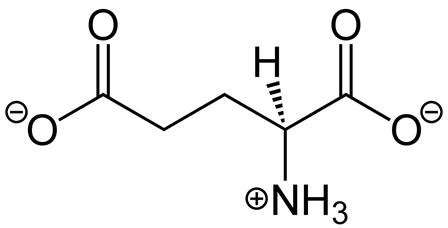

For more than thirty years the main line of research has been the dopamine hypothesis — the idea that dopamine signalling is disturbed in schizophrenia. It is the reason most antipsychotic medications act on dopamine receptors. It is a hypothesis, not a settled explanation, and glutamate and GABA are both under active investigation as well.
If you need help right now
- Call 911 for emergency services, or go to the nearest emergency room.
- Call 988 — the 988 Suicide & Crisis Lifeline, 24 hours.
- Text HOME to 741741 — Crisis Text Line.
A note from the team
We are not experts and do not seek to diagnose or act in place of professional psychiatric treatment. We are an organization seeking to raise awareness. If you have concerns about any of this material, please email us.
Sources
- National Institute of Mental Health — Schizophrenia (the definition)
- World Health Organization — Schizophrenia fact sheet (the worldwide rate — checked September 2026)
- National Institute of Mental Health — Schizophrenia statistics (the US range and the age of onset — checked September 2026)
- Hany M, Rehman B, Rizvi A, Chapman J — Schizophrenia, StatPearls, National Library of Medicine (the lifetime risk, the incidence rate ratio and its reversal after the mid-forties, and the ICD-10 categories — checked September 2026)